
This exclusive piece explores extraordinary interviews and stories from around the globe.
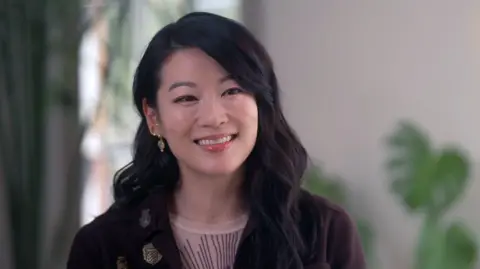
"{I disliked that I looked Asian, that I lacked light-colored eyes and fair hair, because those were the beauty standards back then," reveals the actress, who portrayed Rumi in Netflix's highly successful movie, KPop Demon Hunters.
The performer, 40, is describing her childhood in Texas, as the eldest daughter of parents who emigrated from Korea and her struggle for acceptance in the United States.
In the movie, which narrates the tale of a girl group who must rescue humanity from evil forces, Rumi has to accept her true nature as a hybrid being – and when she first saw the screenplay, this resonated powerfully.
"Growing up in the US, feeling American but having people treat me like I'm not, grappling with my sense of self as an Korean-American, as a Asian-American, as a woman," she says.
These were all components of her formative years that paralleled the character's path.
"Truthfully, at various stages in my existence, I despised a lot of myself and I wanted to be someone else.
"During childhood, your surroundings influences who you become and I feel like I lacked exposure to enough people that shared my appearance."
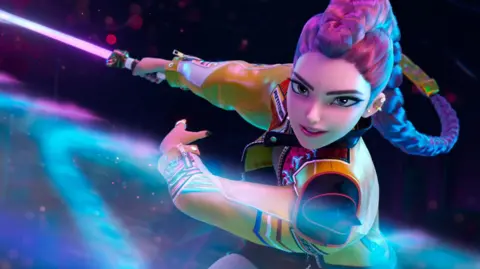
When it debuted on the platform in June, KPop Demon Hunters achieved 33 million views in just two weeks, and secured the highest positions of the streaming rankings in dozens of nations. To be part of the pioneering animation set in Korea, with Asian protagonists, was for Cho "an aspiration realized" – but it has also established her as a powerful role model for Asian-American children, the type that was missing when in her youth.
She notes many individuals of Korean descent have told her it's "a breath of fresh air", making them proud for the first instance of their mixed background and cultural roots.
"In my view Korean pop music really, truly, has paved the way. K-beauty has had such a big impact on Korea being loved. But I believe the film is the one that pushed it further, of, inspiring travel to Korea, now," she comments.
But the movie's triumph was uncertain and Cho says she felt the production crew were "occasionally struggling against odds".
"It seems it kind of sucks to say this, but whenever there's an Asian-led project, it's perceived like it's a risk," she reveals.
So, when she accepted the part, she made an effort to meet everyone working on the film face-to-face, she says.
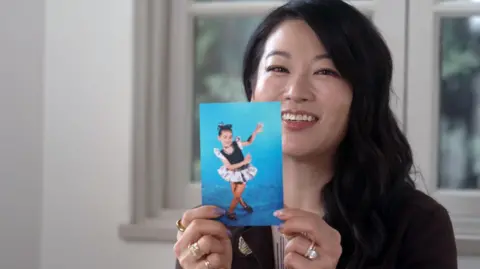
The film was released amid heightened enforcement actions in the US as part of extensive removal policies, which sparked protests in numerous regions.
As an person of Asian descent residing in America "it's deeply saddening," she states. "Immigrants have shaped the nation."
Reports have suggested that up to one hundred fifty thousand individuals from Korea lacking legal status, including those who were adopted, are among those who could be deported.
As an grown-up, Cho came to realise that the prejudice she had encountered when in her youth stemmed mainly from a knowledge gap, as people didn't know what it signified to be Korean or Asian.
"But now, in the modern era, when it seems the world and individuals ought to be more informed, it is beyond disappointing and at times it appears we feel so hopeless," she expresses.
Because of this, it's particularly meaningful, she notes, that the film could bring "optimism and happiness to various groups".
"Perhaps this explains it's sort of like the season's hit film, because we just needed positivity and something to unite us all together."
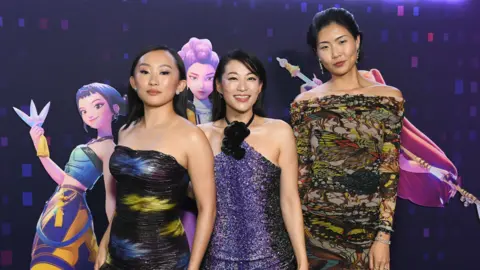
The advancement of artificial intelligence is a major concern for the film industry, raising the possibility that in coming years it could be used to produce a movie like the animation.
Cho acknowledges she is conscious that technology is already being used to copy actors' voices, but wants to "maintain faith in people" that individuals will still pursue art created by humans.
"Sure, I'm sure they're going to have AI actors and vocalists. I'm aware they already exist. I know performers' voices are already being manipulated, but I hope people have appreciation and want and love for something real."
The film has also been dominating the global music charts, with seven tracks from its score featured on the Billboard Hot 100. It has its own fan art, and viewers around the world are demanding a follow-up.
Cho tells us she would like to confirm the question of if a sequel is planned – but both she and fans will have to await the platform or the studio, which produced the movie, to approve the project.
"I'm aware there's lots of murmurs, I've heard wonderful things," she shares. "So we shall see, and I believe fans everywhere would riot if there wasn't."
- Starting conversations, fostering relationships and combating false narratives through features, in-depth reports, conversations and remarkable accounts
