
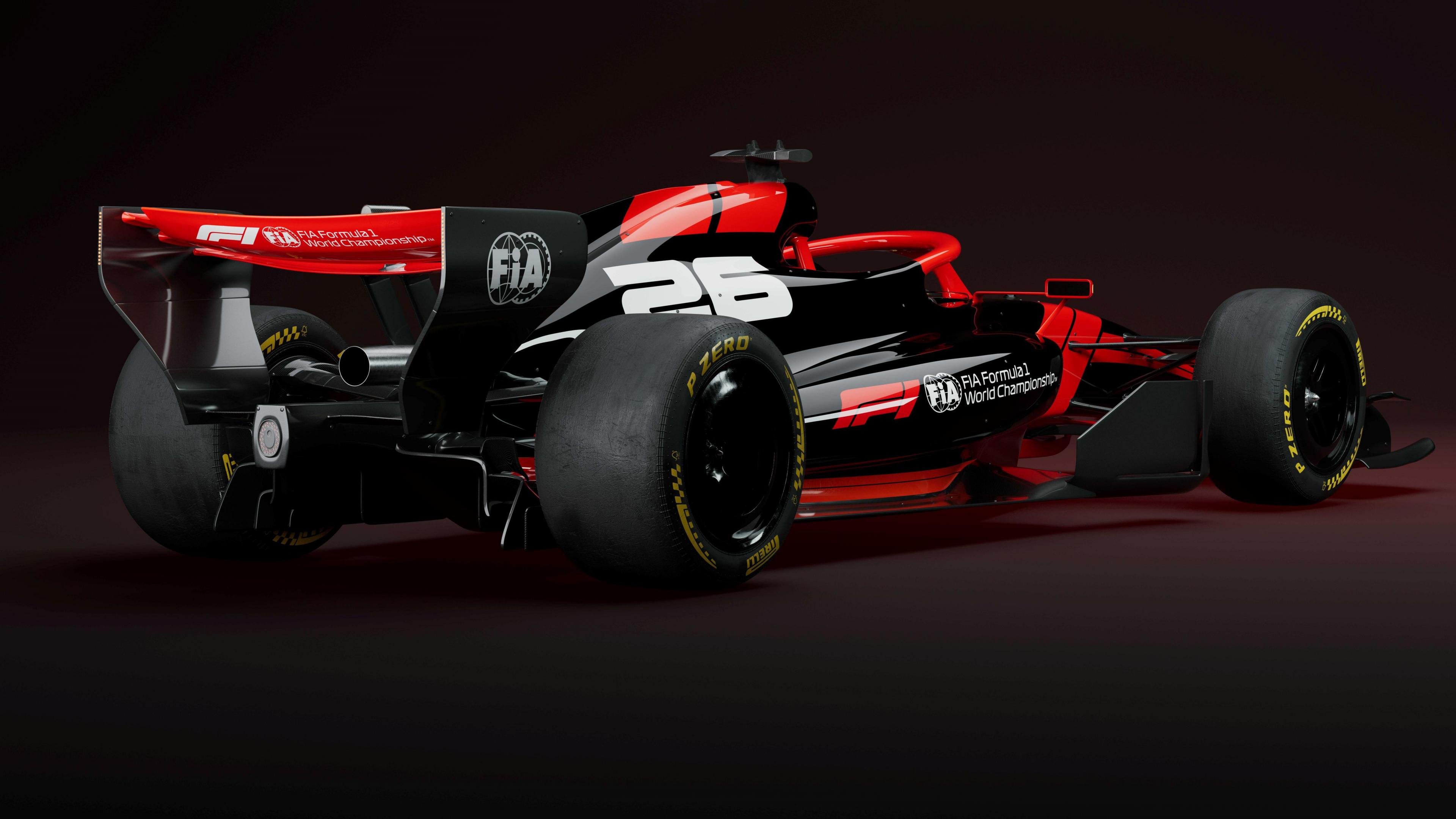
The 2026 Formula 1 cars are expected to be lighter, more agile and sustainable than this year.
The world of Formula 1 has revealed the simplified language that will be used to describe the intricate details of its new 2026 technical rules.
The racing series is implementing what is arguably the largest technical shift in its long history starting in 2026, featuring new chassis and engine rules and the required adoption of fully sustainable fuels.
The new power units, which retain the 1.6-litre V6 configuration, boast a greatly enhanced electrical capacity, necessitating key advancements in the aero packages.
During grand prix events, pilots will strategically manage electrical energy – sometimes even qualifying laps – to secure the peak result.
Broad surveys were conducted with a mix of viewers, including dedicated enthusiasts and casual observers, to identify which terms would aid comprehension of the key features of the upcoming rules.
The stated goal was to make a series of complex technical aspects of the competition as accessible as possible for the broadest viewership.
Consequently, previous placeholder terms for specific components – such as "x-mode and z-mode" for the active aerodynamics – have been phased out in favour of straightforward terms that clearly indicate the actual function of the system.
What's the New Technology?
According to rule-makers that competitors will have more power to make decisions regarding battery management, harvesting, and conservation.
The new regulations feature a range of settings that will be visually displayed on television graphics to enhance the fans' insight of the race battle.
- Overtake Mode: This supersedes the current DRS. It provides a burst of extra electrical energy accessible when a competitor is close behind the vehicle in front to facilitate an pass.
- Power Mode: This is a on-demand power boost from the ERS that can be utilized during attack or defence. It provides the pilot full engine and battery energy at the activation of a control.
Both of these key functions will have to be used with calculation, as the available electrical charge is strictly limited.
- Active Aerodynamics: Both the car's wings adjust their angles – flattening on the long straight sections for low aerodynamic resistance and higher speed, and angling down in the turns for optimal cornering performance.
- Battery Recharge: Drivers can harvest energy with regenerative braking, or during coasting at the conclusion of a straight or in certain corners where only reduced throttle is used.
Car Design Evolution
The next-generation machines will be smaller and lighter compared to the 2025 spec, with a wheelbase cut by 200mm to 3,400mm, car width narrowed by 100mm – down to 1,900mm – and the lowest permissible weight decreased by 30kg.
Overall downforce is expected to drop by approximately fifteen to thirty percent, although constructors will naturally regain performance as they refine their designs.
Air resistance has been cut by 40%. The cars will utilize moveable wing elements – front and rear wings will open on the straight sections to reduce drag and enhance velocity and click back into place for optimal grip in corners.
Pirelli tyres will keep 18-inch wheel rims, but the tyres themselves will be reduced in width, by a quarter-centimetre on the front and three centimetres on the rear.
What's Changing in the Engines?
The 2026 engines will have an approximate 50-50 split in power produced by the ICE and the electrical system, increasing from about 20% electrical this year.
The energy recovery system is made less complex through the removal of the complex turbo energy recovery device, the sophisticated and pricey unit that harvested power from the turbocharger.
Cars will be required to run on fully sustainable fuel, created from biomass or lab-created processes.

